
Spezialschwimmer für Photovoltaikmodule
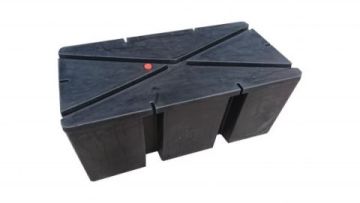
Photovoltaic modules floats – Advanced engineering for floating solar arrays (FPV)
Floating Photovoltaics (FPV) is one of the most rapidly expanding sectors of renewable energy, ideally suited for industrial reservoirs, retentive basins, quarry lakes, aquaculture ponds, and water treatment basins. The core modular component in our product range is the highly durable Pontoon for photovoltaic modules, black, 200 liter, Polyethylene. Floating solar platforms eliminate the need to consume valuable agricultural or industrial land, converting unutilized water bodies into high-yield clean energy systems under the highest safety guidelines.
The primary advantage of placing solar arrays on water is the natural evaporative cooling effect from the water and the cooler air above the surface. This process drastically limits thermal losses, boosting electricity generation efficiency by 5% to as much as 15% compared to traditional ground-mounted solar farms. In addition, the floating structures cover the reservoir surface, reducing evaporation losses and suppressing algae bloom by shading the water.
Safe high-voltage cable routing and robust FPV support structures
Our solar float units are manufactured from high-density polyethylene (HDPE) using rotational molding. This seamless monolithic structure ensures 100% watertight integrity, extreme UV resistance, frost proofing (safely overwintering in frozen waters), and total chemical resistance in industrial settlement ponds. The flat top surface (100x50x42 cm) is designed with dedicated mounting sockets to bolt aluminum or steel solar frames directly. To route high-voltage transmission cables from the floating solar array to the shore safely and professionally, we recommend integrated Floats 2-way cable / pipe holder, which float the lines on the surface and prevent dragging on the rocky bottom.
Advantages of Floating Solar Float Systems – Why choose us?
- Boosted Generation Yield: Natural water cooling increases the solar cells' electricity output by up to 15%.
- Seamless HDPE Construction: Rotational molding in the EU guarantees absolute watertightness with zero seams.
- Reservoir Conservation: Shading the water body cuts evaporation rates and suppresses harmful algae growth.
- Professional Cable Infrastructure: Easy integration with specialized pipe/cable floats for secure surface routing.

Expert opinion – efficiency of floating solar systems
FPV (Floating Photovoltaic) systems are a major leap forward in green energy. The water's cooling properties optimize the operating temperature of silicon wafers, preventing drop-offs in power output on hot summer days. At Sorfan, we strongly emphasize professional cable management. Allowing heavy high-voltage cables to drag along the reservoir bed is highly dangerous, exposing them to abrasive rocks or anchor lines. Elevating cable lines on specialized pipe-holder floats is the only engineering standard to ensure long-term, fail-safe operation.
FAQ – Frequently asked questions
How much does water cooling improve solar panel efficiency?
Water cooling naturally lowers the solar panels' operating temperature. This thermodynamic benefit increases electricity generation by 5% to 15% compared to land-based arrays on hot summer days.
Are Sorfan solar floats resistant to freezing temperatures?
Yes. The floats are made from rotations-molded HDPE, retaining their impact strength and elasticity down to -30°C. They easily withstand ice expansion stress, allowing the array to overwinter in the ice without disassembly.
How do I safely route power transmission cables from the floating array?
Cables should be floated on the surface of the water using specialized pipe/cable floats with 2 or 3 guide holes. This prevents the cables from dragging on the bottom, avoiding abrasion and mechanical stress.
Does a floating solar array affect the water quality?
Yes, the impact is highly positive. The floating arrays shade the water, cutting evaporation losses by up to 70%. In addition, the reduced sunlight exposure suppresses algae bloom in the reservoir.
What material are the solar floats made of?
The floats are manufactured in the EU from certified high-density polyethylene (HDPE). The polymer is 100% recyclable, inert, non-toxic, and fully safe for sensitive aquatic flora and fauna.
How are the solar mounting frames bolted to the floats?
The flat 100x50x42 cm top surface features built-in mounting points, allowing you to bolt aluminum or steel profile structures securely to the floats, creating a highly rigid support deck for the solar modules.