
Unsere Kunstoff Pontons sind flexibel einsetzbare Elemente, einfach und schnell aufzubauen. Die Pontons sind Wetterfest.
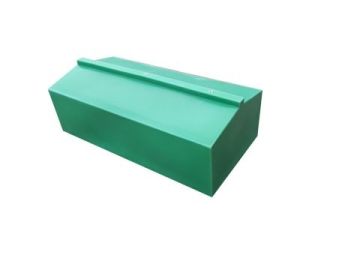
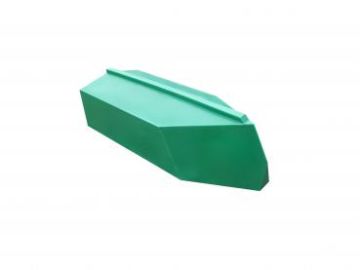
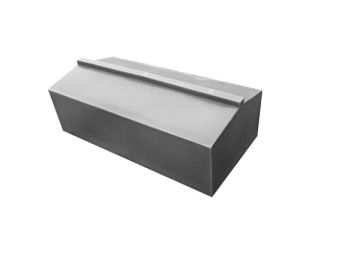
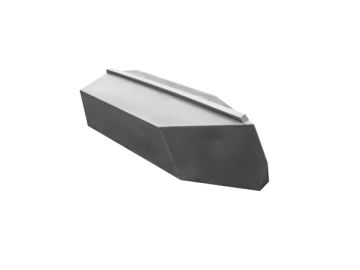
Catamaran floats – Premium foundation for your DIY boat project
Specialized polyethylene catamaran floats offer a highly reliable and durable foundation for constructing double-hull boats, leisure catamarans, houseboats, and floating platforms. The core building blocks of our system are the Pontoon boat centre piece and the hydrodynamic bow/stern Pontoon boat end piece. These modular floating hulls are engineered specifically for DIY assembly, providing total freedom in customizing width, length, and displacement.
Manufactured using advanced rotational molding technology with high-density polyethylene (HDPE), each module is a single solid monolith. They feature a seamless design with zero welds, eliminating any risk of leakage caused by impacts or mechanical stresses. The polymer is fully resistant to marine salt, harsh UV radiation, freezing temperatures, and chemical corrosion, allowing the boat hulls to overwinter in the ice without any risk of structural degradation.
Simple structural assembly – Integrated steel M10x25 threads
The key feature simplifying DIY catamaran construction is the set of embedded steel threaded inserts (M10x25). This professional engineering solution allows for direct, extremely secure, and rigid bolting of the floats to the steel or aluminum load-bearing frame of the boat, completely eliminating the need for complex mounting brackets or heavy welding. The buoyancy of the modules is designed for optimal load distribution: the centre piece provides 100 liters of displacement, while the aerodynamic end piece has a volume of 125 liters, making it easy to calculate total load capacity.
Advantages of Sorfan Catamaran Floats – Why choose us?
- Integrated M10x25 Threads: Rapid, rigid, and secure bolting directly to the boat's load-bearing metal frame.
- Seamless HDPE Construction: Single-mold manufacturing ensures 100% watertight integrity and extreme impact strength.
- Hydrodynamic Bow Profile: Optimally shaped nose pieces reduce water drag, improving fuel efficiency and steering response.
- Versatile Marine Use: Excellent not only for catamaran boats but also for custom floating docks, wharves, and piers.

Expert opinion – constructing a DIY catamaran boat
Building your own catamaran is a highly rewarding DIY project, but hull integrity and rigid connection are critical for safety. Polyethylene floats with integrated M10x25 threaded sockets are a true game-changer. They provide an exceptionally rigid, direct connection to the boat frame, minimizing vibration and stress during wave motion. The hydrodynamic nose pieces split the waves cleanly, reducing drag and optimizing fuel economy.
FAQ – Frequently asked questions
How do I calculate the load capacity of a catamaran using Sorfan floats?
You must add the buoyancy of all the modules combined in both hulls. The centre piece provides 100 kg (100 liters) of buoyancy, and the end piece provides 125 kg (125 liters). Always ensure a safety margin of at least 50% relative to the total weight of the boat including the engine and passengers.
What is the purpose of the M10x25 steel threaded elements?
These are factory-molded steel nuts embedded in the polyethylene, featuring an M10 internal thread with a depth of 25 mm. They allow you to screw the floats directly to the structural steel or aluminum frame of the boat, avoiding complex straps.
Can catamaran floats be used to build a floating pier or quay?
Yes. The heavy-duty, seamless polyethylene structure and the flat mounting surface with integrated threads make these floats highly suitable as buoyancy segments for modular docks, leisure wharves, and floating piers.
Are the polyethylene hulls resistant to hitting rocks?
Yes. High-density polyethylene (HDPE) exhibits exceptional elasticity and mechanical toughness. Upon hitting a submerged rock or tree trunk, the material flexes and springs back to its original shape rather than cracking like fiberglass.
Do the catamaran floats need to be removed from the water in winter?
No. The HDPE polymer is completely frostproof and retains its elasticity. It easily withstands ice expansion pressure, meaning the hulls can safely remain in frozen waters during winter.
How do I connect the middle and bow segments of the hull?
The segments are placed linearly under the boat's frame, and each segment is individually bolted to the frame using the M10x25 threads. The rigid frame of the boat holds all the segments together, forming a solid hull.